Optinformatics for Evolutionary Learning and Optimization: Methodological Advances and Engineering Applications
Held in Conjunction With MIND 2026
Nov 13 to 15, 2026, Chongqing, China
Invited Speakers
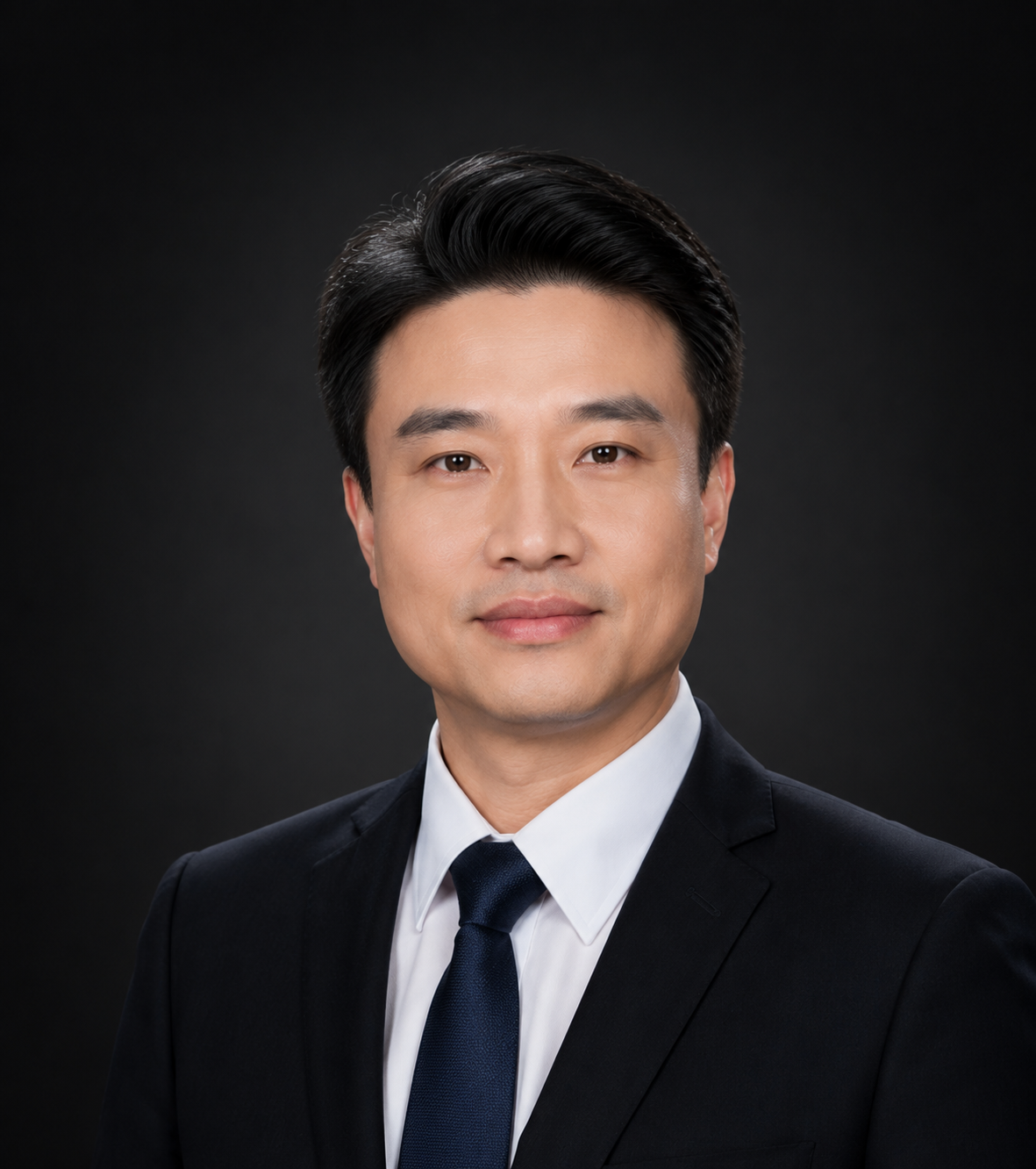
Jose A. Lozano
University of the Basque Country (UPV/EHU) and Basque Center for Applied Mathematics (BCAM), Spain
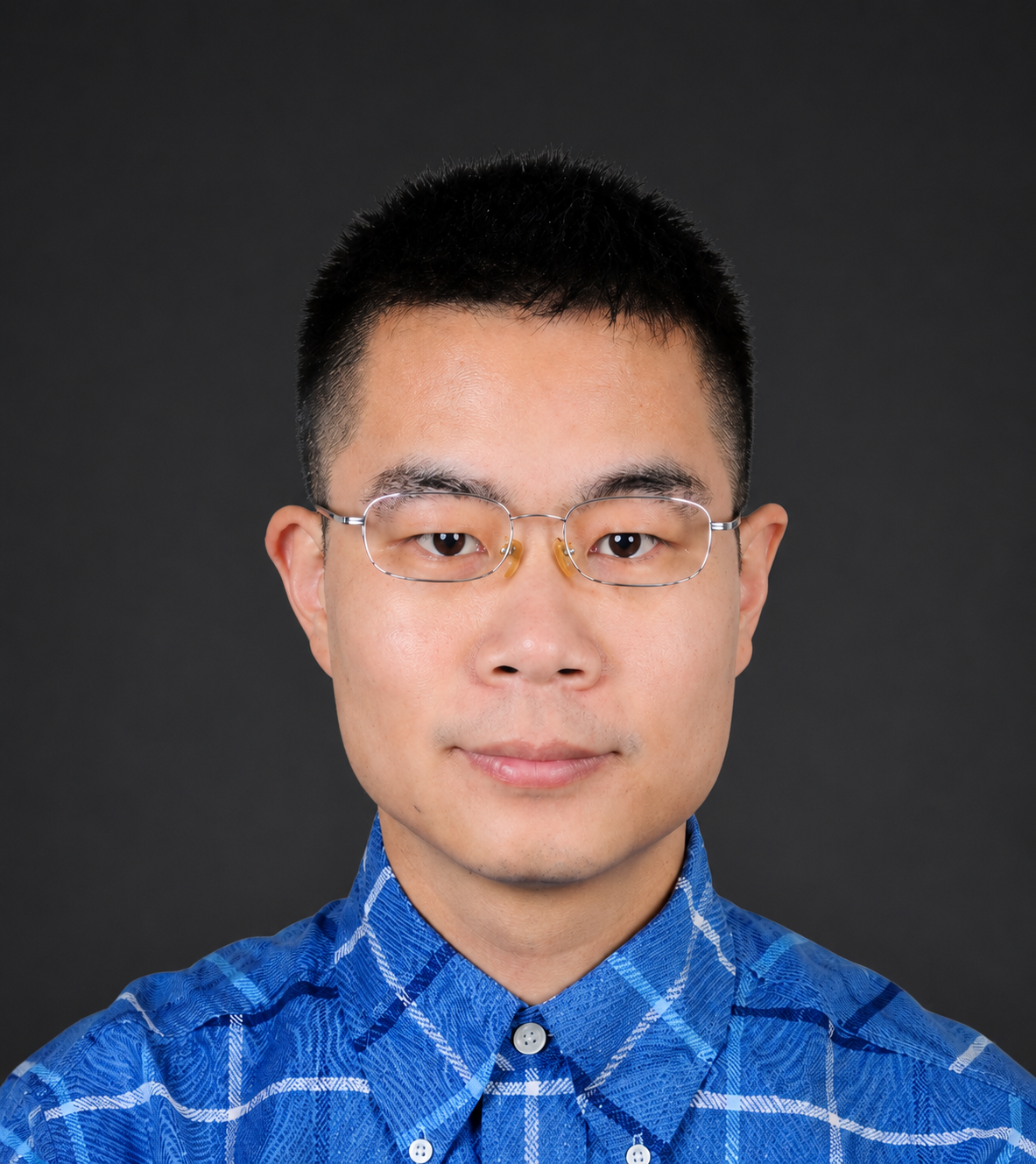
Bernhard Sendhoff
Honda Research Institute Europe GmbH, Offenbach, Germany
Xiangjian He
University of Nottingham Ningbo China
Aim and Scope
This workshop aims to bring together researchers, practitioners, and industry experts to explore recent advances in optinformatics for evolutionary learning and optimization, an emerging paradigm that integrates data-driven knowledge extraction with evolutionary search processes. While evolutionary algorithms have demonstrated strong global optimization capabilities across diverse domains, they traditionally operate in a problem-independent manner, often neglecting valuable knowledge accumulated from previously solved tasks. Optinformatics addresses this limitation by incorporating techniques from data mining, machine learning, and information processing into the optimization pipeline, enabling more efficient, knowledge-aware, and adaptive search.
The workshop will cover methodological innovations in evolutionary learning, including inter-problem knowledge transfer, data-driven feature engineering, and evolutionary reinforcement learning, as well as their applications in real-world scenarios such as vehicle routing, automated machine learning, and complex system optimization. By bridging optimization theory, data-centric learning, and engineering practice, this workshop aims to provide a platform for exchanging novel ideas, fostering interdisciplinary collaboration, and advancing the development of next-generation intelligent optimization frameworks.
Workshop Topics
We invite contributions that present novel insights, methodologies, and applications in optinformatics for evolutionary learning and optimization. Submissions should advance the integration of data-driven knowledge discovery with evolutionary search, enabling more effective, adaptive, and scalable optimization frameworks. Topics of interest include, but are not limited to, the following themes:
Inter-Problem Knowledge Transfer
Transfer learning, multitask optimization, warm-start strategies, and experience reuse across related optimization problems.
Data-Driven Feature Engineering
Landscape analysis, representation learning, surrogate-assisted search, and feature extraction for optimization and evolutionary learning.
Evolutionary Reinforcement Learning
Hybrid reinforcement learning and evolutionary computation methods for policy search, decision-making, and adaptive control.
Optinformatics for AutoML
Neural architecture search, hyperparameter optimization, pipeline configuration, and automated model selection with knowledge-enhanced search.
Combinatorial and Large-Scale Optimization
Knowledge-guided optimization for routing, scheduling, allocation, and other complex combinatorial or high-dimensional problems.
Real-World Applications and Benchmarking
Industrial case studies, benchmark design, performance analysis, and deployment of optinformatics methods in engineering and intelligent systems.
Submission papers must be no longer than 6 pages for long papers, including all text, figures, and references.
SHORTUp to 2 pages
Submission papers must be no longer than 2 pages for short papers, including all text, figures, and references.
ABSTRACTUnder 300 words
We also welcome the submission of Abstracts (under 300 words) for published papers and ongoing works.
Presentation and Proceedings
The accepted long and short papers will be presented at the conference and included in the proceedings. The accepted Abstracts will be presented at the conference, but will not be included in the conference proceedings.
Supplementary material (e.g., appendices, data, source code, resubmission information) can optionally be submitted by the paper submission deadline.
Generative AI Policy
Generative AI models, including ChatGPT, LLaMA, DeepSeek, or similar LLMs, do not satisfy the criteria for authorship of papers published in MIND 2026. If authors use LLMs in any part of the paper-writing process, they assume full responsibility for all content, including checking for plagiarism and correctness of the entire submission.
Review Process
All submissions will be thoroughly reviewed by experts in the fields.
5. General Co-chairs
Ong Yew Soon
Nanyang Technological University
Zexuan Zhu
Shenzhen University
6. Organizing Committee (in alphabetical order by the last name)
Huanhuan Chen
University of Science and Technology of China
Xuefeng Chen
Chongqing University
Xin Deng
Chongqing University of Posts and Telecommunications